Caffenol Recipes Compared: Which One Fits What
C-M, C-H, Delta: which caffenol recipe belongs to which material, and how to read what went wrong.
August 22, 2026 · 5 min read · Przemek Zajfert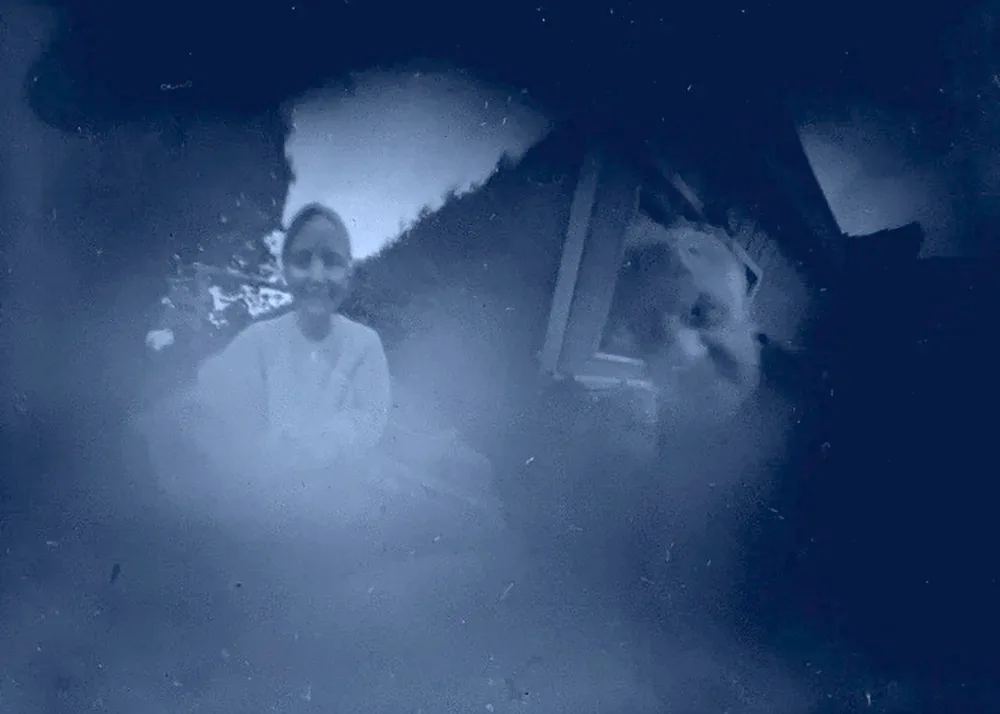
There is no single caffenol recipe. There are a handful, and what separates them is less the idea than the material they were written for: normally sensitive film, faster film, microfilm, photographic paper. Pick the wrong one and you do not get a ruined picture, you get a pale one. This piece sorts the common variants, says what each belongs to, and then shows how to read what went wrong.
Our camera holds exactly one sheet of paper. One half was exposed by somebody, the other half by somebody else, perhaps years later. There is no second attempt. Which recipe goes into the tray is therefore not a matter of taste here. It is the last decision before the picture.
What caffenol actually is chemically, why the caffeine is not what does the work, and which of the three ingredients does what, is covered in the piece on the basics. Here the subject is the differences between recipes.
The common variants, sorted by material
Caffenol-C-M, the standard for ordinary film. Per litre of water: 40 g instant coffee, 56 g washing soda, 16 g vitamin C. Development around 12 to 15 minutes at 20 °C (whatyousee.ch, read 22.08.2026). This is the baseline everything else is measured against.
Caffenol-C-H, when the film is faster. Same idea, plus a small amount of potassium bromide against fogging. photoinfos.com describes exactly that purpose for its own mix: roughly 0.5 g of potassium bromide per half litre for films above ISO 100, with no change to the time (photoinfos.com, read 22.08.2026). We carry only this one source here, so work up to it rather than adopting the figure outright.
Caffenol-C-L, for long semi-stand development. Heavily diluted and left alone for most of a long development. One documented mix for Kodak T-MAX 400: 8 g washing soda, 5 g vitamin C, 1 g potassium bromide and 20 g coffee in 500 ml of water, 60 minutes in total at 20 °C. Agitate ten times to begin with, then three times at 1, 2, 4, 8, 16 and 32 minutes, and let the tank stand for the rest (haun-media.de, read 22.08.2026).
Delta-STD and Delta-MIC, the specialists. For Ilford Delta 400: 1 litre of water, 24 g washing soda, 20 g vitamin C, 45 g coffee. For Agfa Copex Rapid, a microfilm: 1 litre of water, 22 g coffee, 32 g washing soda, 10 g vitamin C. Both 9 to 11 minutes at 20 °C (caffenol.org, read 22.08.2026).
And the recipe that sits inside our camera. 250 ml of water, 15 g baking soda, 4 g vitamin C, 10 g instant coffee, about five minutes, for a single A5 sheet of photographic paper.
One conversion comes up constantly when comparing: where one source gives anhydrous soda and another the crystalline form, the factor between them is roughly 2.7. caffenol.org states the factor outright and works it through: 24 g corresponds to 65 g, 32 g to 86 g (caffenol.org, read 22.08.2026).
Washing soda or baking soda, the one difference that matters
Almost every film recipe above says washing soda, ours says baking soda, and the reason is in the basics. What matters here is the consequence: tipping a film recipe unchanged onto a sheet of paper rarely ends well.
What goes wrong, and how to read it
An even grey veil. The image looks flat and even unexposed areas are not clear. On faster materials this is the classic case for that small amount of potassium bromide, with no change to the time (photoinfos.com, read 22.08.2026).
A brown deposit that hides the image. During development a brownish cast settles over the material, and anyone judging too early takes the picture for a failure. Wash until no brown coffee residue is visible (photoinfos.com, read 22.08.2026). That the brownish tone itself is not a fault is covered in the basics.
Acidic baths after development. For Fomapan films the source explicitly advises against acidic stop and fixing baths, to avoid emulsion defects (photoinfos.com, read 22.08.2026). For our paper route this does not apply, because no fixing bath is involved at all. We list it anyway, because it turns up whenever you read film recipes.
The mix simply does not work. If the result comes out nearly blank, it is almost always one of four things, in this order: the wrong alkali, ingredients not fully dissolved, too low a temperature, and only after that the exposure. The first three are kitchen errors and quickly fixed.
One sheet, no test strip
This is where the sorting matters differently for us than it does in most guides. Develop a film and you have a dozen frames on the roll; print in a darkroom and you pull a test strip first. In both cases a failed attempt is material, not a loss.
That is why our instructions carry exactly one recipe rather than five, why it is tuned to paper instead of derived from a film mix, and why it names fixed quantities rather than a range. Anyone who mixes that one recipe carefully needs none of the variants above. Anyone who knows them understands better why ours looks the way it does.
The full steps for that route are in the instructions, and what happens afterwards in the tray is in the basics.
Where these figures come from
The recipes above are published third-party figures, each with its source and read date. We have not verified them in our own darkroom, and for C-H and C-L we carry a single source each. What we can speak to from practice is the route our camera takes: a single sheet of photographic paper, mildly dosed, in a kitchen under red light.
Common questions
- Which caffenol recipe suits which film?
For normally sensitive black and white film, Caffenol-C-M is the usual starting point. Faster material calls for a version with potassium bromide, which suppresses fogging. Ilford Delta and microfilm each have their own differently dosed recipes. Photographic paper, which is what sits in our camera, needs something else again: a gentler mix.
- Why does Both In Time use baking soda instead of washing soda?
Because paper reacts more readily than film. Washing soda is the stronger alkali and standard in film recipes; baking soda is milder and suits a single sheet of photographic paper. The long version is in the piece on the basics.
- How do I recognise fogging, and how do I avoid it?
Fogging shows up as an even grey cast across the whole image, including areas that were never exposed. With faster materials a small amount of potassium bromide is added for exactly this reason, and the development time stays the same.
- What if the negative comes out almost blank?
Usually the chemistry did not work, or there was not enough light. Check in this order: the right alkali, fully dissolved ingredients, the temperature, and only then the exposure. An under-developed mix looks a lot like underexposure.
- Can I take a film recipe straight to photographic paper?
Better not. The proportions are tuned to film, and paper responds differently to a strong alkali. Use a recipe meant for paper, or the one that comes with our camera.