Lomography Pinhole Alternative: an honest comparison
The Diana Multi Pinhole Operator puts three holes into one exposure. Both In Time puts two holes onto two people. When each one is the right camera.
August 21, 2026 · 7 min read · Przemek Zajfert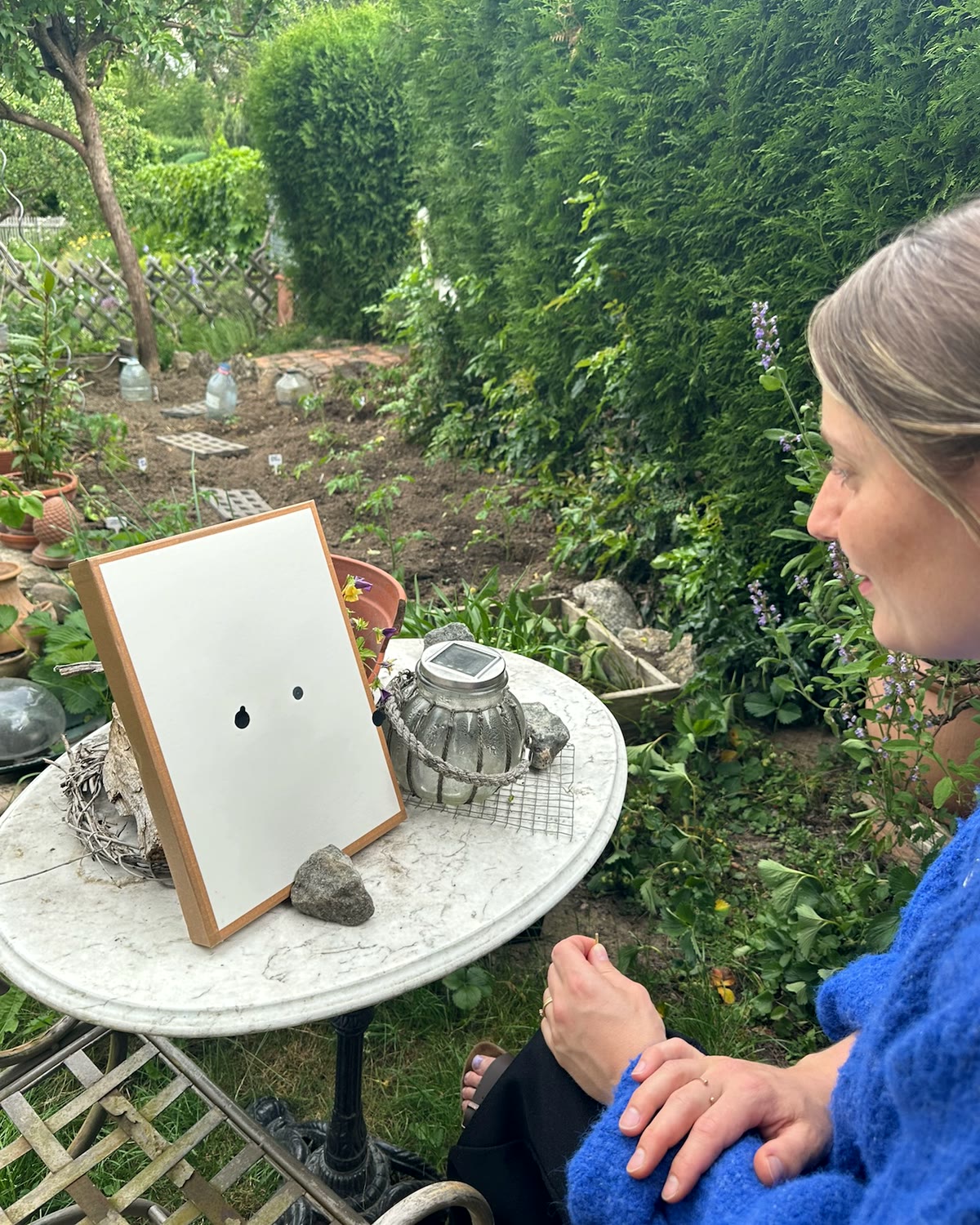
Most people searching for a Lomography pinhole alternative have the Diana Multi Pinhole Operator in mind and one of two very different questions behind it. The first: is there another camera I can use to experiment with light and holes myself? The Diana is a good answer to that, and this piece says honestly why. The second: is there something I do not use on my own? Both In Time was built for that second question. It is an analog pinhole time-capsule camera for two people.
The confusion this page exists to clear up is right there in the name. Multi pinhole sounds like several people. It means several holes.
Everything below about the Diana comes from a German retailer and a German review aggregator, read on 21.08.2026, with dates and sources attached. One limitation belongs here rather than in the small print: Lomography's own shop pages block automated access and we could not read them. The price below is a German retail price, not a manufacturer price. Please check it yourself before buying.
What the Diana Multi Pinhole Operator is
The Diana Multi Pinhole Operator is a plastic pinhole camera from Lomography's Diana family, built for 120 roll film. Its distinguishing feature is three holes instead of one. You decide per frame whether light falls through one, two or all three. With all three, the same subject is layered over itself three times, slightly offset.
The German retailer Klang und Kleid lists it on 21.08.2026 at 50 euros including VAT, marked immediately available, delivery one to three working days, order number hp710pc. In the box are colour filters for the holes, which the retailer describes as producing a psychedelic effect, and masks for three formats: 4.6 by 4.6 centimetres in twelve frame mode, 4.2 by 4.2 centimetres in sixteen frame mode, and 4.6 by 4.6 centimetres in sixteen frame mode. It accepts Diana accessories including the Instant Back+, and it has a flash connection.
The German review aggregator Testberichte.de lists it as Gut with 2.2 points, drawn from nine customer reviews on Amazon.de, and describes the soft focus and the near unlimited depth of field that give the pictures a dreamlike appearance.
One detail about that source is itself a finding: the page is dated 17.06.2009. German language editorial coverage of this camera is essentially seventeen years old. That is no criticism of the camera. It only means you will have to form your own view of the product's current state.
What it is good at
It is cheap, it is available now, and it is a real instrument for experiments. Three holes, colour filters, multiple exposure, a panorama function by winding during the exposure: that is a lot of room for under sixty euros. If you want to try pinhole photography as your own practice and make many pictures doing it, this is a tool that lasts and fits in a jacket pocket.
Where it stops
It exposes film, and film usually means a lab. Twelve or sixteen frames per roll, then developing, then waiting and a cost that repeats with every roll. For many people that is precisely the appeal. For someone who wants one picture and not an ongoing practice, it is a barrier.
And it is built, like nearly every camera, for one person. One person holds it, one person releases the shutter, one person gets the picture. Three holes change none of that.
What Both In Time does differently
Ours is a handmade cardboard pinhole camera, built in Stuttgart, to order. Inside sits a single sheet of A5 photographic paper. It carries two exposures, and not from one person in sequence but from two people.
Here is how it runs. Person one pierces a 0.3 millimetre hole with a needle, exposes their half of the sheet, tapes the camera shut, writes or draws on it, and passes it on. Person two exposes the second half weeks or decades later. The one shared sheet is then developed at home under red light in caffenol, that is instant coffee, baking soda and vitamin C. The wet negative is photographed and inverted with a free browser tool.
Neither of them made the picture alone. That is not meant as a metaphor. It is a physical fact about a sheet of paper.
The camera costs 79 euros. From six units the price per unit is the same, on one invoice to one address.
Where the two holes come from
This shape did not begin as a product idea. It began as a workaround. In 1999 Przemek built the first camera obscura with two holes, one for Stuttgart and one for Berlin, because two artists were too far apart for a shared picture. Six years later that turned into a project that auctioned both holes of the same camera on eBay every week, to two highest bidders somewhere in the world. It ran for twenty years and ended in 2025 at 2072 holes.
The gap between the two holes was 73 millimetres. Close enough that the two images overlap, and that is the whole point: the halves are meant to touch, not to sit side by side.
One pair from that archive explains the difference from the Diana better than any comparison can. Pinhole 75 and 76 went to Keith Fyfe in Sydney and Steven Schmiedeskamp in Lincoln, Nebraska, sixteen thousand kilometres apart. Both photographed outdoors, into flat country, against a low sun. The two halves fit together so well that you could take the finished picture for a single landscape. Nothing was arranged. There was no way to arrange anything.
Three holes in one exposure produce an effect, and a good effect is a real thing. Two holes on two continents produce a coincidence nobody could have manufactured. That is the entire difference between the two cameras on this page.
Where we stop
This belongs in an honest comparison too. Ours is not a reusable camera. One object, one sheet, one picture. If you want to photograph regularly, you would be buying the wrong thing from us.
There is no viewfinder and no automatic exposure, there is an instruction page and an exposure calculator on the site. And the part that surprises most people: you see nothing for weeks or years. A normal camera shows everything at once. This one shows nothing until the second half is exposed. The waiting is the heart of it rather than its price, but anyone who wants a quick result will not enjoy it.
The direct comparison
Number of holes, and what it means. Diana: three holes, one exposure, one person. Both In Time: two holes, two exposures, two people.
What carries the image. Diana: 120 roll film, twelve or sixteen frames, developing usually at a lab. Ours: one sheet of A5 photographic paper, one picture, developed in your own kitchen.
Time between shutter and seeing. Diana: days to weeks, depending on the lab. Ours: as long as sits between the two people.
Price. Diana: 50 euros at the German retailer Klang und Kleid, read 21.08.2026, plus running costs for film and developing. Ours: 79 euros once, the paper is included.
Reusable. Diana: yes, for years. Ours: no, one object for one picture.
What it is built for. Diana: your own photographic practice. Ours: one shared picture with one particular other person.
How to switch, if you want to
If you already own a Diana and still ended up here, you do not need to give anything up. The two do not exclude each other, and the most honest advice is usually this: keep the Diana for yourself and take Both In Time for the other person.
First: decide who exposes the second half. That decision is the product. Everything else follows from it.
Second: fix when. A date helps, even a distant one. The wedding anniversary in ten years, the eighteenth birthday, the next visit across an ocean.
Third: expose your half, tape the camera shut, and label it so that the second person still knows what to do in ten years.
Fourth: pass it on. From here the camera is no longer only yours.
The verdict
If you are looking for a Lomography pinhole alternative because you want to experiment more yourself, the Diana Multi Pinhole Operator is hard to beat, and we say that without gritted teeth: fifty euros, three holes, colour filters, usable for years.
If you are looking because something about the Diana was missing and you could not name it, this was probably it. The camera is for you alone. An analog pinhole time-capsule camera for two people is a different category, and Both In Time is built for it. One photograph. Two people. Across time.
Have a look at the camera if a particular person came to mind while reading. That is usually the right answer to whether the object suits you.
Further reading
- ONDU pinhole camera alternative: an honest comparison, if you are weighing the higher priced wooden cameras against each other.
- Buying a pinhole camera: what matters, for the overview of the whole market.
- Caffenol basics, if developing with coffee interests you more than the camera does.
Common questions
- Is Both In Time a replacement for the Lomography Diana Multi Pinhole Operator?
No, they solve different problems. The Diana is a reusable medium format camera for your own photographic practice, where one person combines several holes in a single exposure. Both In Time is a single object for a single picture whose two halves are exposed by two people, one after the other. If you want to experiment yourself, the Diana is right. If you want a picture made with another person, we are.
- What does the Diana Multi Pinhole Operator cost in Germany?
The German retailer Klang und Kleid lists it at 50 euros including VAT on 21.08.2026, marked as immediately available. We could not read Lomography's own shop page, which blocks automated access, so please check the current price with Lomography directly before you decide.
- Does multi pinhole mean two people can shoot it?
No, and this is the most common mix-up. On the Diana, multi pinhole means several holes, one picture, one person, one moment. The three openings sit side by side and lay the same subject over itself with a slight offset. On Both In Time, two holes means two halves, two people, two points in time.
- Do I need a darkroom for either camera?
Not for Both In Time. The A5 photographic paper is developed at home under red light in caffenol, that is instant coffee, baking soda and vitamin C, and the wet negative is photographed and inverted with a free browser tool. The Diana exposes 120 roll film, which usually goes to a lab or needs your own developing kit.
- Which of the two is the better gift?
It depends on who receives it. For someone who wants to discover photography as their own practice and enjoys experimenting, the Diana is a good and inexpensive tool. For two people who want to hold on to something together, a grandmother and a grandchild, or two friends on two continents, Both In Time is what was built for that.
- Can I use film instead of paper in a Both In Time camera?
No. The camera is built around a single sheet of A5 photographic paper that carries both exposures. That paper route is exactly what makes the project workable for people with no lab experience, because it needs no darkroom.